
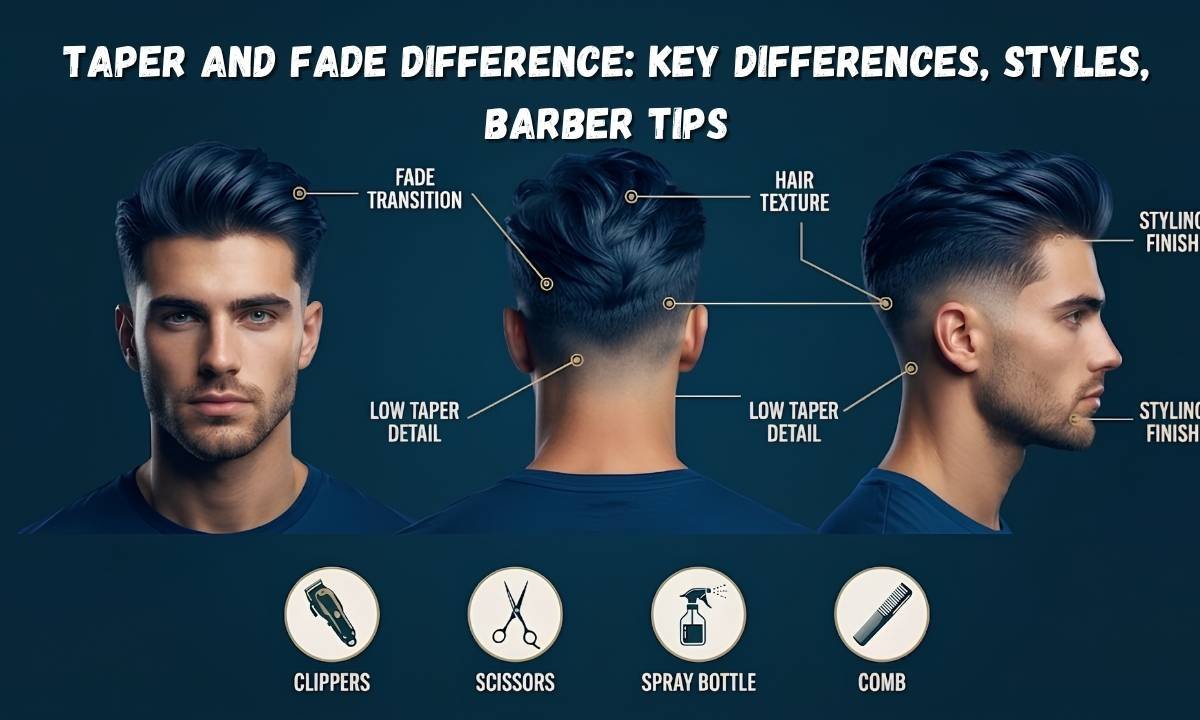
Ever sat in the barber chair and froze? You know you want clean sides. But taper or fade? Many guys mix them up. The taper and fade difference is simpler than it sounds. A taper trims short at the edges. A fade drops down to skin. Even a trendy burst fade taper haircut starts with these basics. Read on, pick your look, and walk out feeling sharp and confident.
What Is the Difference Between a Taper and a Fade?
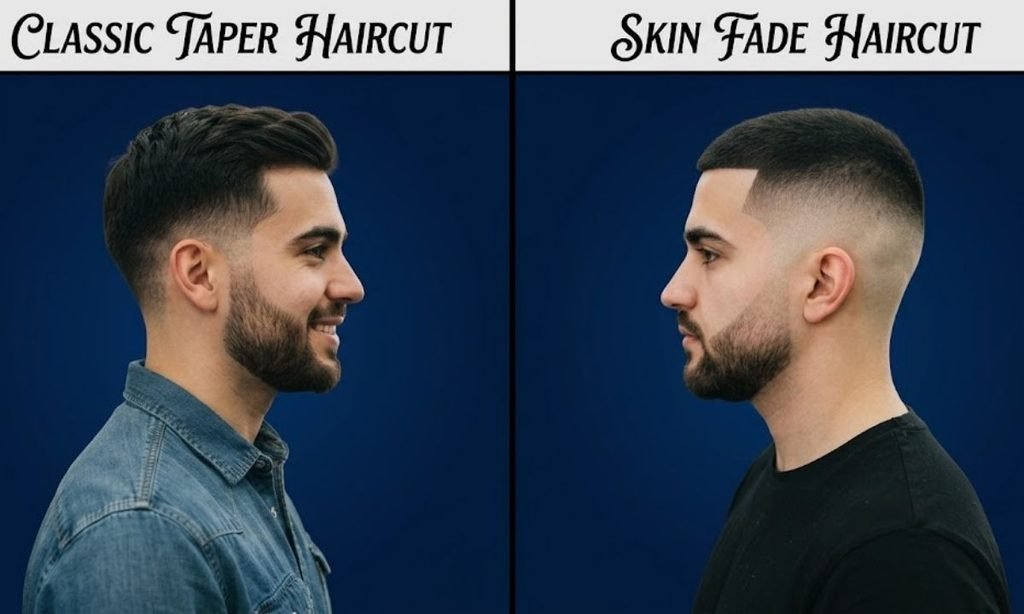
Quick answer: A taper gets shorter slowly and stops at the edges. A fade drops much lower, often down to bare skin. The taper and fade difference mostly comes down to how short and how high the blend goes.
Think of a taper as a soft whisper. A fade is more like a loud shout. Both belong in any list of modern men’s haircut styles.
Quick Comparison:
| Feature | Taper Haircut | Fade Haircut |
| Blend area | Sideburns and neckline | Sides and back |
| Shortest length | Short, not bare | Often skin |
| Look | Soft and natural | Bold and sharp |
| Upkeep | Every 3 to 5 weeks | Every 2 to 3 weeks |
| Best for | Professional haircut | Modern, edgy styles |
What Is a Taper Haircut?
Quick answer: A taper haircut makes the hair shorter as it moves down toward the neck and ears. It keeps some length at the end. The result looks clean but not harsh.
A taper is the classic choice. Your grandfather probably wore one. It still works today.
Main Features of a Taper
- Blends only around the sideburns and neckline
- Leaves visible hair at the shortest point
- Gives a gentle, natural haircut finish
- Works well with a side part with taper
- Needs less frequent trims
What Is a Fade Haircut?
Quick answer: A fade haircut moves from longer hair on top to very short hair or skin on the sides. The change happens over a larger area. This creates a bold, sharp haircut appearance.
Fades have exploded in popularity. Barbers across the USA now offer a dozen versions. Some guys even ask for a burst fade taper haircut, which curves around the ear.
Main Features of a Fade
- Covers more of the head
- Often reaches skin exposure at the bottom
- Creates strong contrast
- Comes in low, mid, and high versions
- Needs regular fade maintenance
7 Key Taper and Fade Differences
Quick answer: The seven biggest differences are blend area, length, skin exposure, look, upkeep, styling choices, and personal style. Let’s go through each one.
1. Difference in the Area of the Blend
A taper blends in a small zone. Think sideburns and neckline. A fade blends across the sides and back. That’s the first taper and fade difference you’ll spot in a mirror.
2. Difference in Hair Length
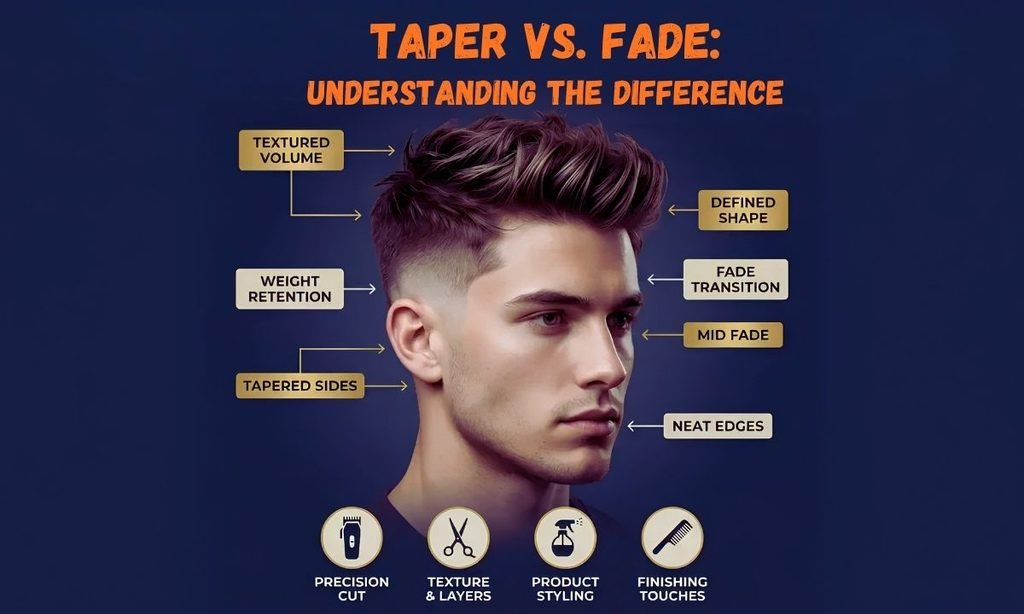
A taper keeps more hair length on sides. Most barbers use a #2 or #3 guard at the shortest spot. A fade often goes to a #0 or even a razor.
Barber tip: A #1 guard leaves about 3 millimeters. A #2 leaves about 6.
3. Difference in Skin Exposure
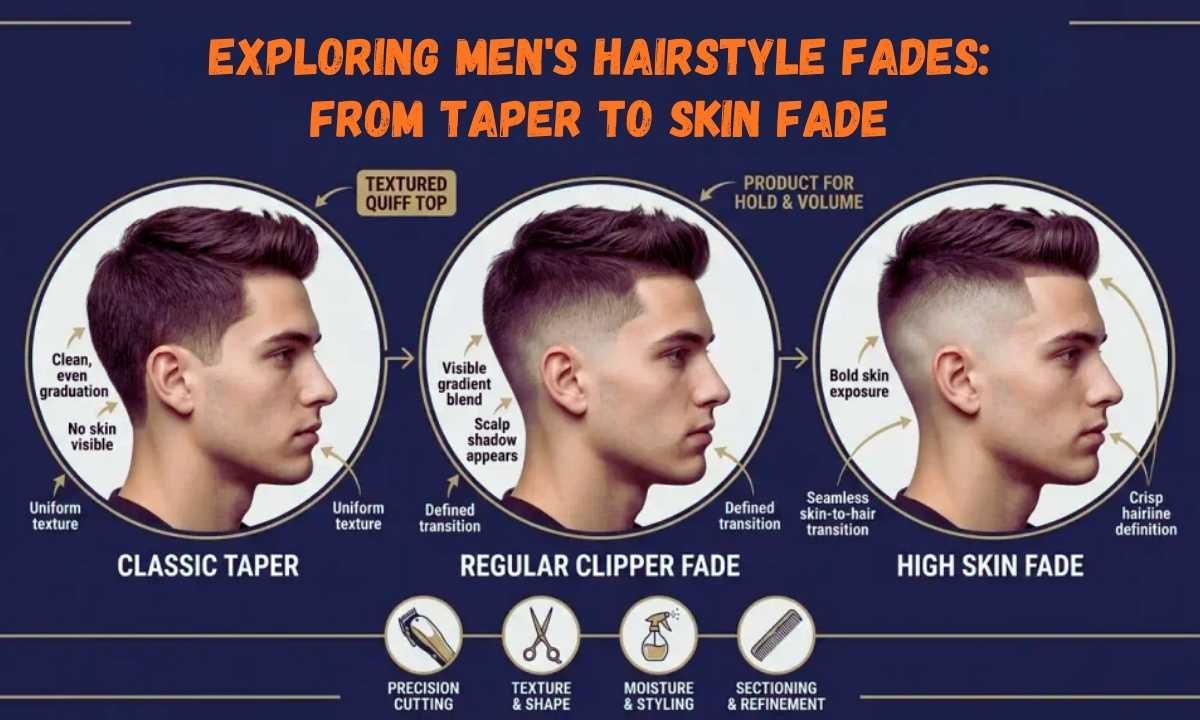
Fades can show your scalp. A skin fade is the extreme version. A taper rarely shows skin. If you hate the sight of your scalp, pick a taper.
4. Difference in Overall Appearance
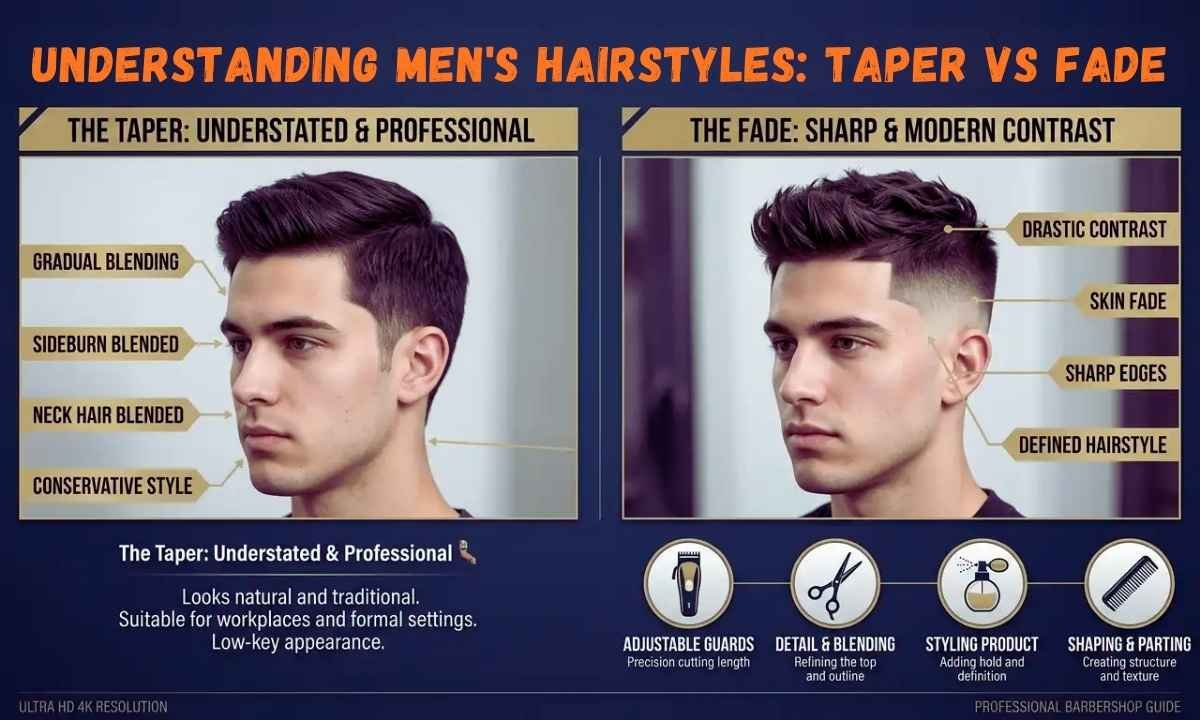
A taper looks tidy and calm. A fade looks bold and fresh. Neither is better. They simply send different signals.
5. Difference in Maintenance
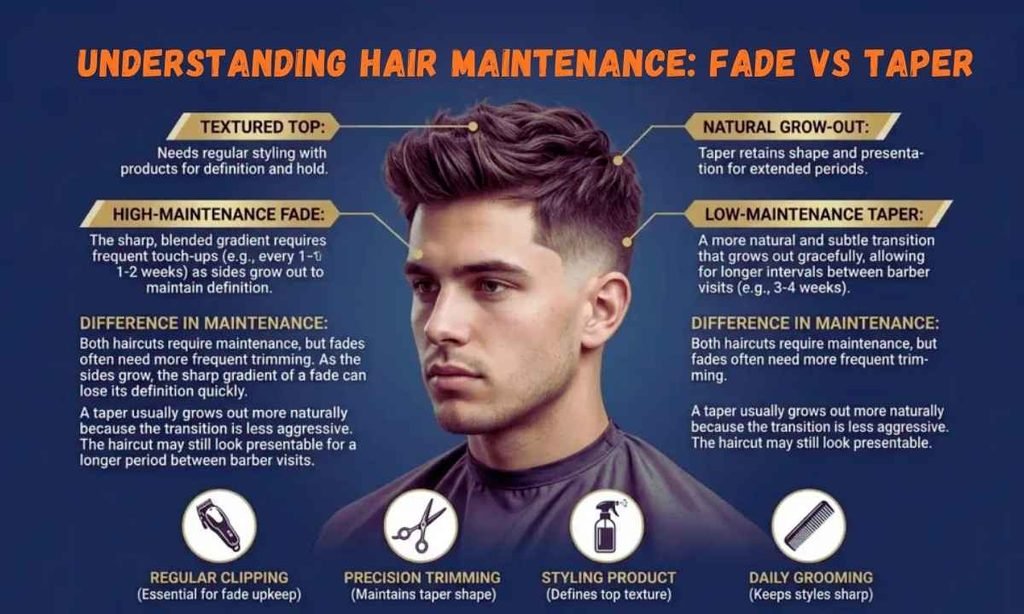
Tapers grow out gently. Fades lose their shape fast. Because of that, haircut maintenance costs more with a fade. Expect a visit every two to three weeks.
6. Difference in Styling Flexibility
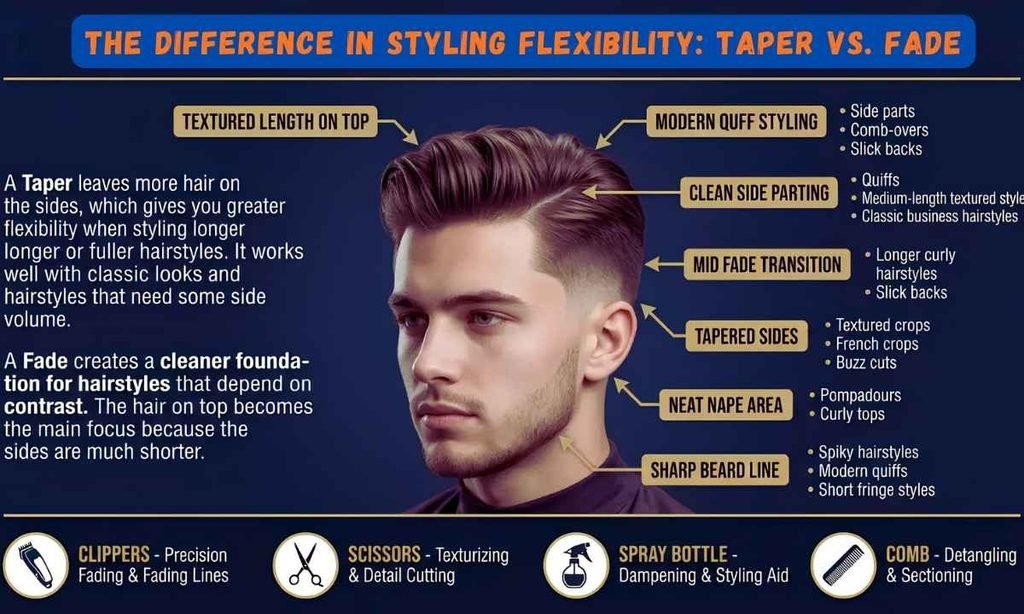
Both work with many tops. A fade pairs well with a pompadour with fade or a curly top with fade. A taper fits a slick back with taper or a classic part.
7. Difference in Suitability for Personal Style
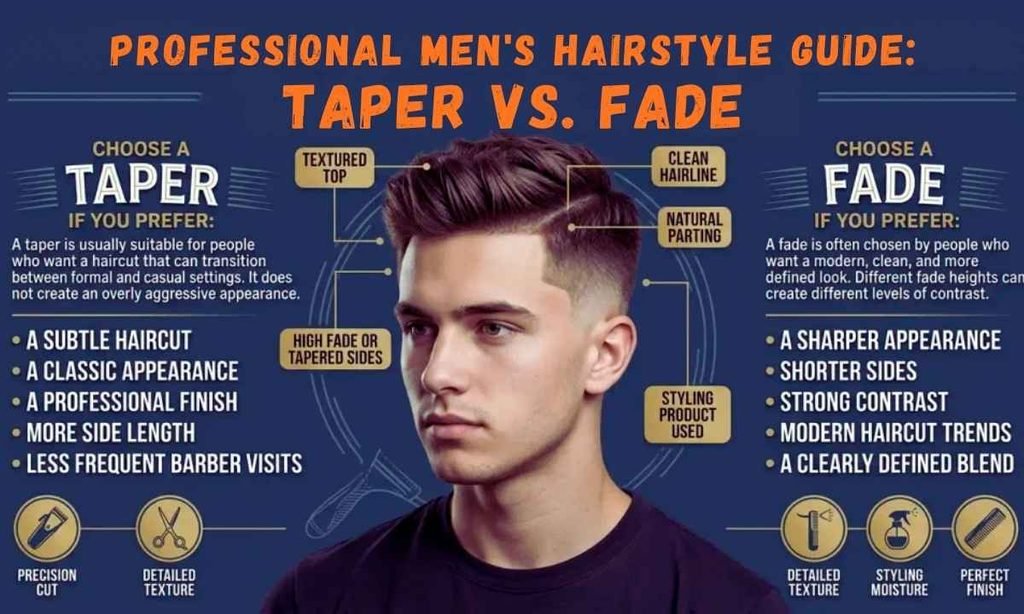
Pick a taper if you like a subtle haircut for men. Pick a fade if you want a bold modern haircut. Your style should lead the choice.
Taper vs. Fade: Popular Haircut Types
Quick answer: Barbers offer seven main styles. Three lean taper and four lean fade. Learning this barber haircut terminology helps you speak up in the chair.
These are the types of taper haircuts and the types of fade haircuts you’ll hear most.
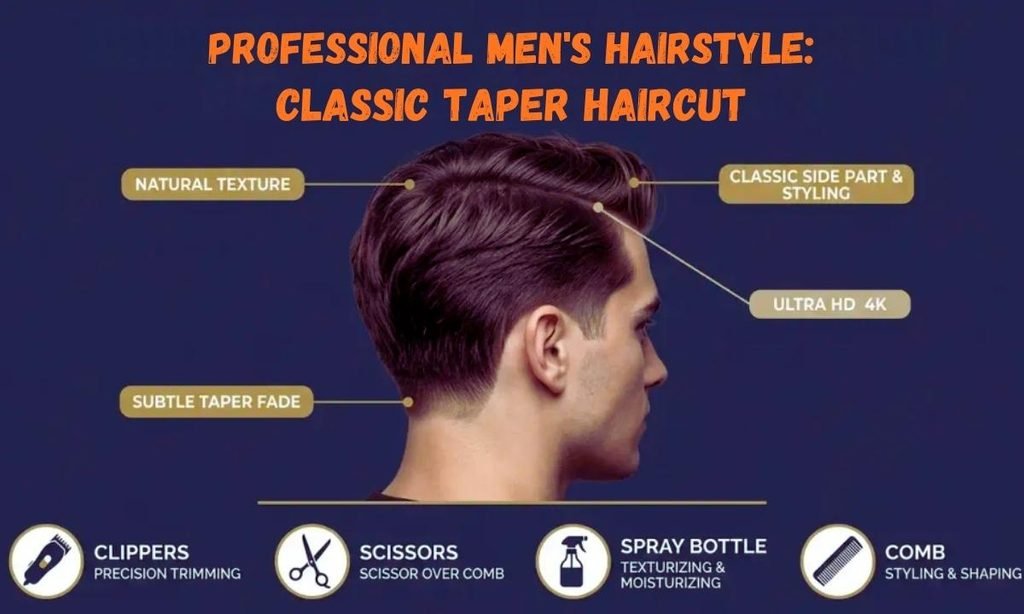
1. Classic Taper
Quick answer: The classic taper trims the sides and back evenly. It’s neat and timeless.
Classic Taper Features
- Short sides with a gradual hair transition
- Clean neckline haircut
- Works for office and weekend
- Easy to style
2. Low Taper
Quick answer: A low taper starts the blend near the ear and neck. It stays small and subtle.
Low Taper Features
- Starts low behind the ear
- Keeps most side hair
- Great for taper for thin hair
- Ideal for first timers
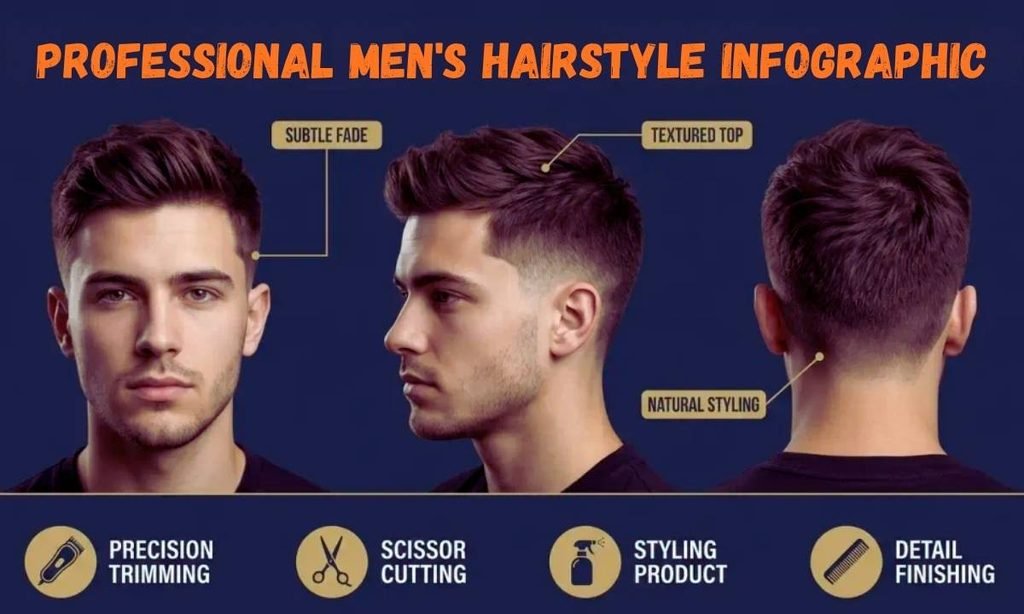
In the low taper vs low fade debate, remember this. The taper keeps hair. The fade removes more.
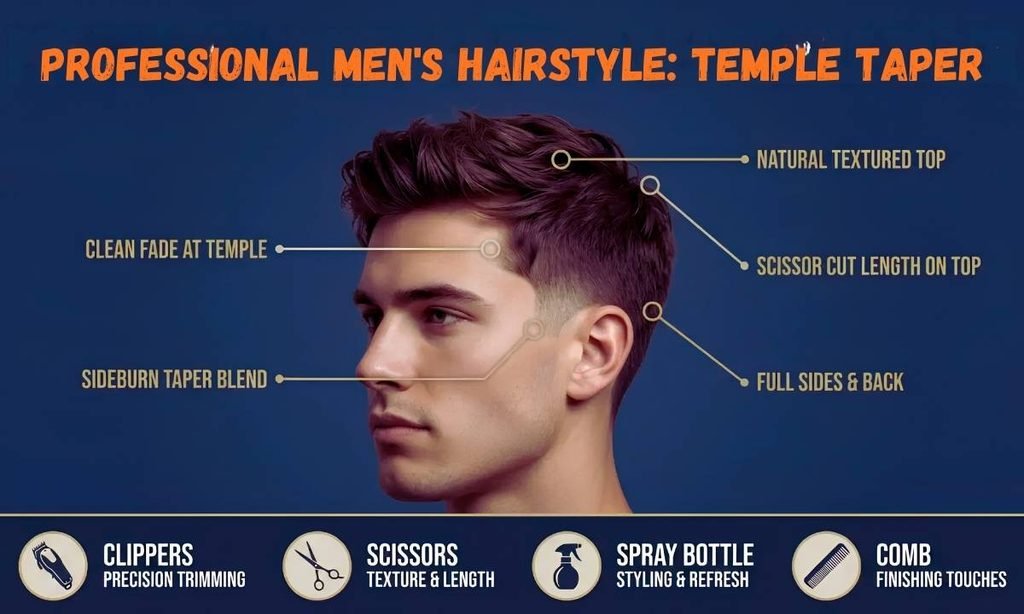
3. Temple Taper
Quick answer: A temple taper tidies only the area near your temples. Everything else stays longer.
Temple Taper Features
- Cleans the temple and sideburns
- Leaves the back natural
- Perfect for long hair
- Pairs with a side part with taper
4. Low Fade
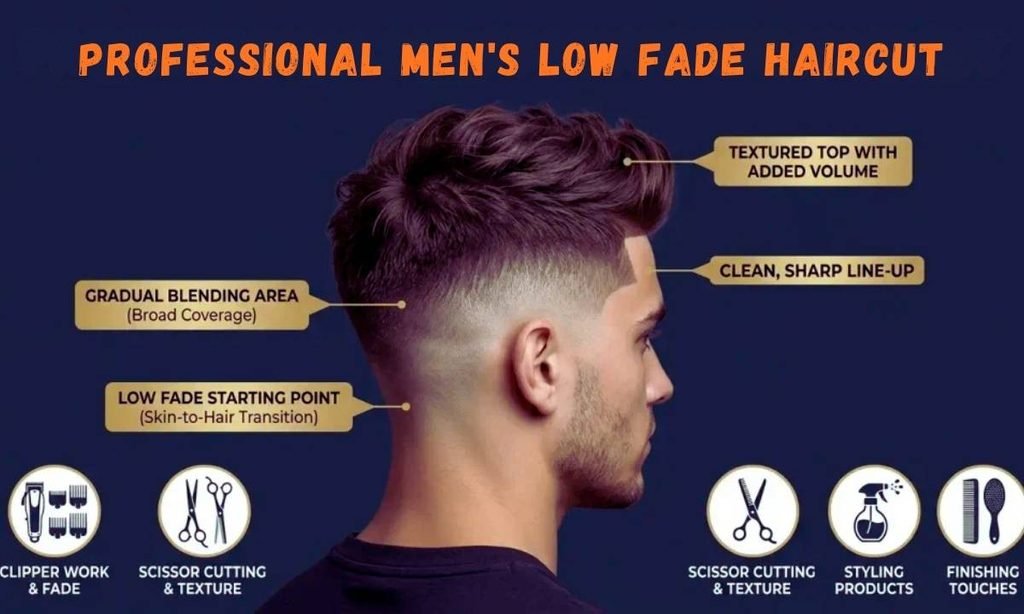
Quick answer: A low fade begins just above the ears. It’s the softest fade you can get.
Low Fade Features
- Blend height sits low
- Can include a skin fade at the bottom
- Pairs with a textured crop
- Safe for most workplaces
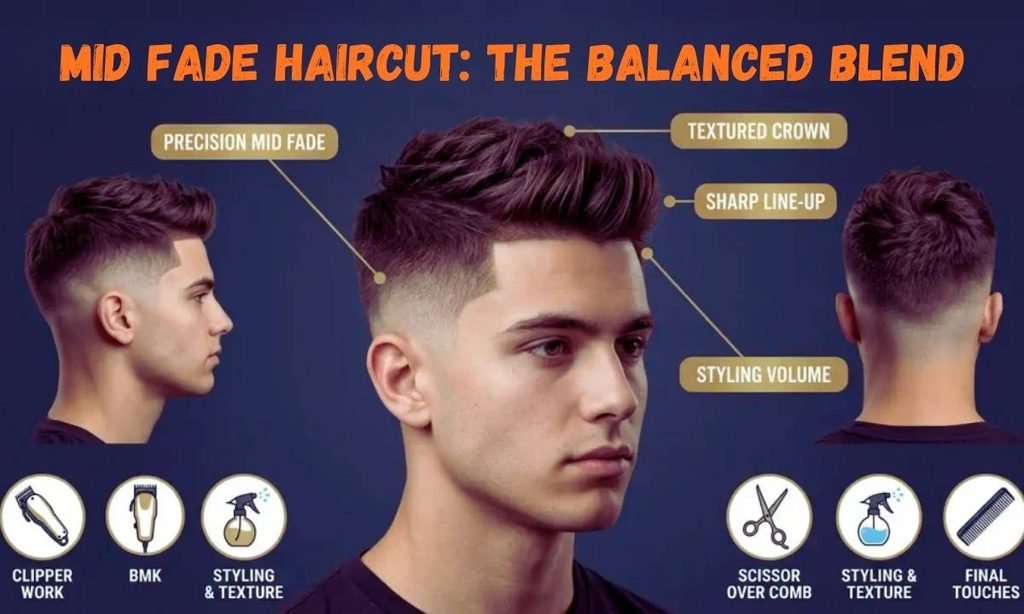
5. Mid Fade
Quick answer: A mid fade starts around the temples. It balances bold and neat.
Mid Fade Features
- Medium blend height
- Strong but not extreme contrast
- Fits most face shapes
- Popular for taper vs mid fade comparisons
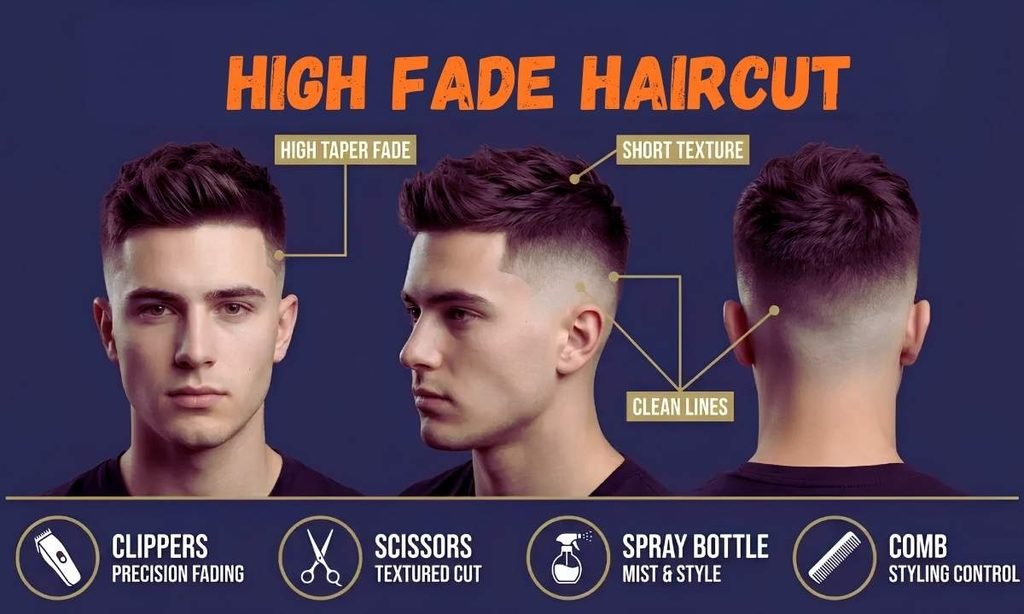
6. High Fade
Quick answer: A high fade starts high on the head. It makes the boldest statement.
High Fade Features
- Shows lots of skin
- Draws attention to the top
- Needs fresh cuts often
- Looks sharp with a pompadour
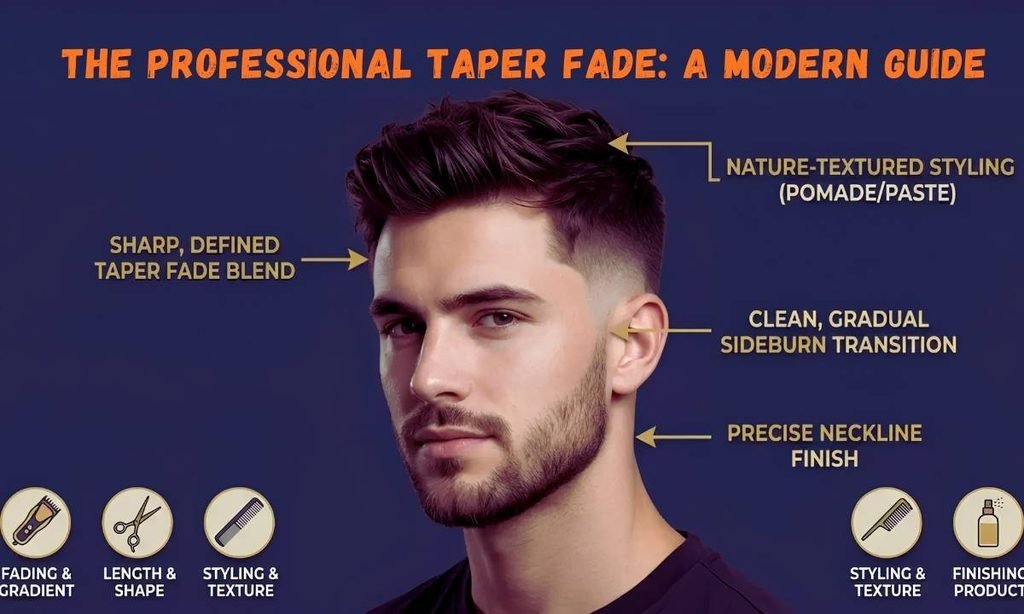
7. Taper Fade
Quick answer: A taper fade mixes both ideas. It blends gently like a taper but goes shorter like a fade. A burst fade taper haircut is a close cousin.
Many barbers call it the best of both worlds. You get softness plus contrast. Ask for it if you can’t decide.
Taper vs. Fade: Which One Looks Better?
Quick answer: Neither wins. It depends on your hair, your face, and your life. Still, many guys ask which is better, taper or fade.
Here’s how it breaks down:
- Taper wins for a classic, professional haircut
- Fade wins for bold, trendy looks
- Taper fade wins for guys who want both
Case study: Jake is 28 and works in finance. He wore a high fade for a year. His boss never complained. But he hated the weekly trips. He switched to a low taper and now visits once a month. His look stayed sharp.
Jake’s story shows the taper and fade difference in real life. Upkeep matters as much as style.
Taper or Fade for Different Hair Types
Quick answer: Hair texture changes everything. Some cuts shine on one type and struggle on another.
Straight Hair
Straight hair shows every line. Fades look super clean here. A taper keeps the top soft. This works for haircut for straight hair.
Wavy Hair
Wavy hair loves a taper. It keeps volume on top. A low fade also works well for haircut for wavy hair.
Curly Hair
Curls look amazing with a fade. Try a curly top with fade. A taper for curly hair keeps shape without losing bounce.
Coily or Afro-Textured Hair
Fades make coily hair pop. A skin fade gives a razor sharp edge. Tapers also work and keep a natural feel.
Thick Hair
Thick hair needs thinning at the sides. A fade removes bulk fast. A taper keeps it neat. Both fit haircut for thick hair.
Fine or Thin Hair
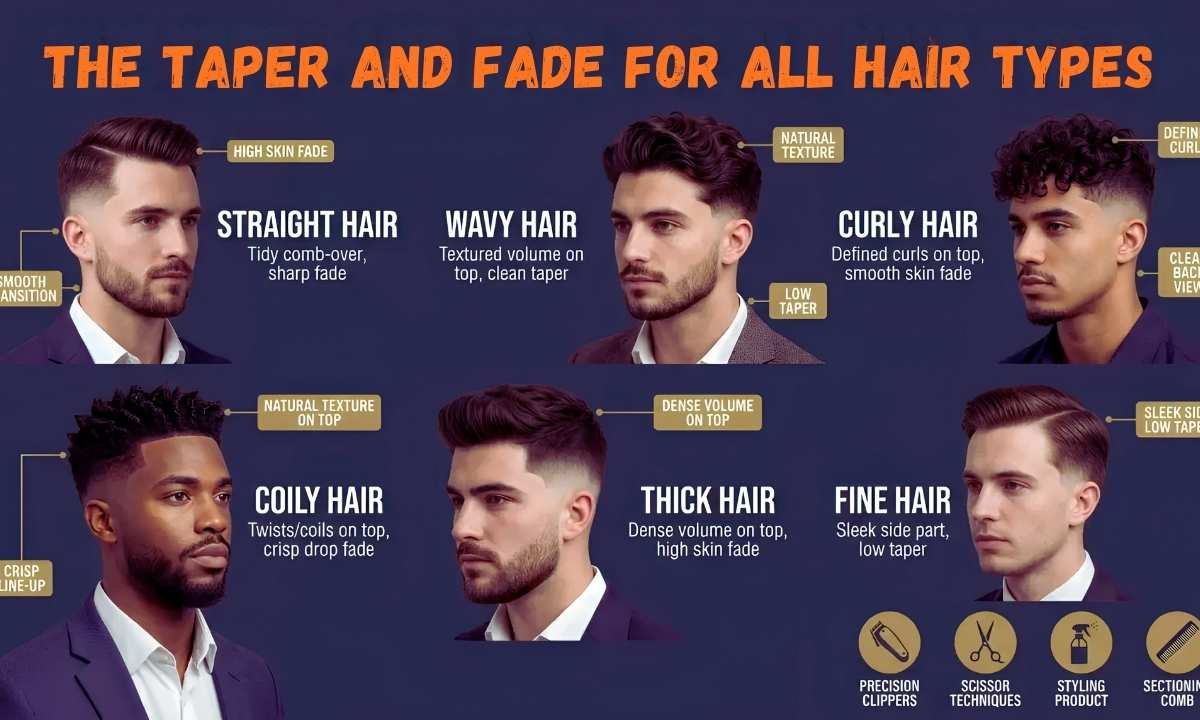
A taper for thin hair keeps the top looking full. Avoid a high fade. It can make thin hair look sparse. Choose a low taper or low fade instead.
Taper and Fade for Different Face Shapes
Quick answer: Pick a haircut for face shape by balancing your angles. Add height to round faces. Add width to long ones.
Oval Face Shape
Lucky you. Almost anything works. A taper for oval face looks natural. A mid fade also fits.
Round Face Shape
Go for a fade for round face. A mid or high fade adds height. It makes your face look longer.
Square Face Shape
Your strong jaw looks great with a taper. A textured crop softens the edges.
Long Face Shape
Skip high fades. They stretch your face more. Pick a low taper with some side volume.
Heart-Shaped Face
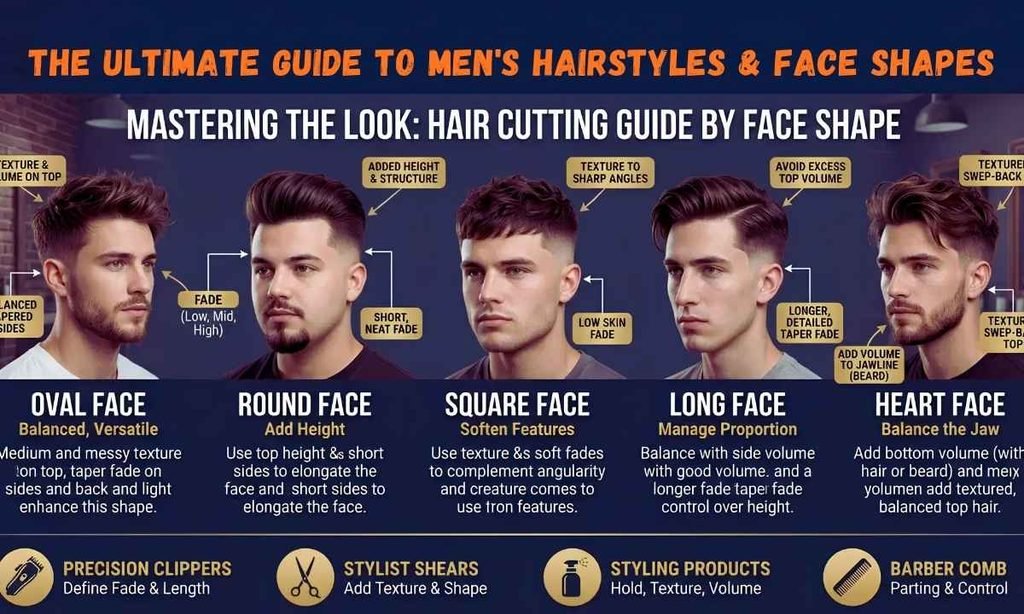
A low fade or taper keeps balance. Keep the top a bit longer. That evens out your chin.
Taper vs. Fade for Work, School, and Everyday Life
Quick answer: Tapers suit strict places. Fades suit relaxed ones. Your daily routine matters too.
For Professional Workplaces
A classic taper wins here. It reads as a professional men’s hairstyle. A low fade also works in most offices.
For School or College
Both work well. Many students love a mid fade. It looks fresh and takes little time to style.
For Casual and Creative Styles
Go bold. Try a high fade with a pompadour. Or a burst fade taper haircut with a textured top.
For Low-Maintenance Routines
A low taper wins. It grows out softly. That makes it a true low maintenance men’s haircut.
Lifestyle Comparison
| Lifestyle | Best Pick | Why |
| Office job | Classic taper | Neat and calm |
| Student | Mid fade | Trendy and easy |
| Creative job | High fade | Bold and loud |
| Busy parent | Low taper | Less upkeep |
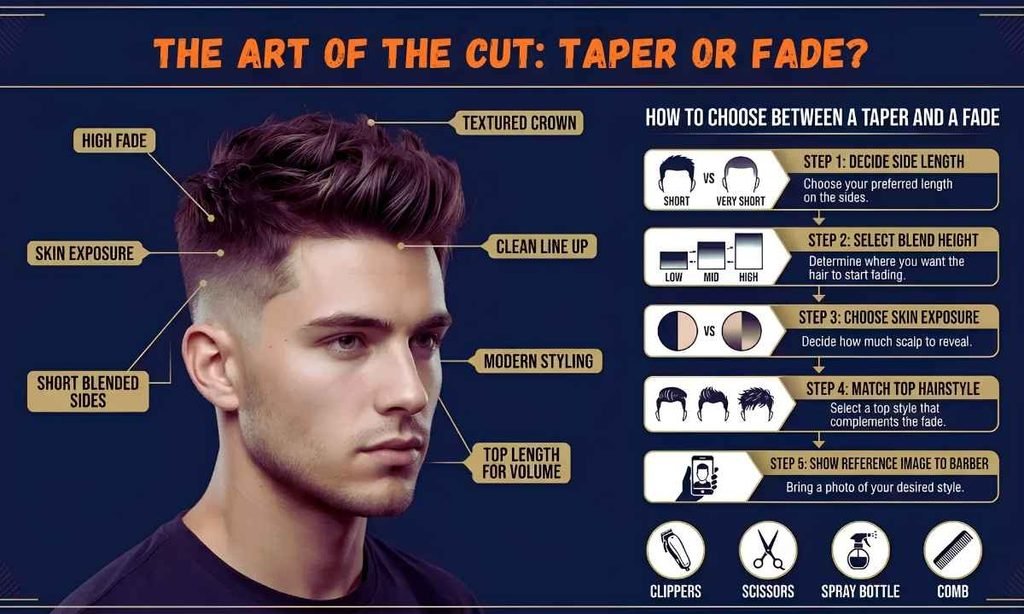
How to Choose Between a Taper and a Fade
Quick answer: Ask yourself five questions. Your answers will point to the right cut.
1. How Short Do You Want the Sides?
Want some hair left? Choose a taper. Want it very short? Choose a fade.
2. Do You Want to See Your Scalp?
If yes, try a skin fade. If no, stay with a taper.
3. How Much Contrast Do You Want?
Low contrast means a taper. High contrast means a fade. The taper and fade difference shows up most here.
4. How Often Can You Visit the Barber?
Every two weeks? A fade works. Once a month? Pick a taper.
5. What Hairstyle Do You Want on Top?
Slick back? Try a slick back with taper. Curls? Try a curly top with fade.
How to Explain Your Haircut to a Barber
Quick answer: Use simple words. Name the cut, the blend height, and the finish. Always bring a photo.
This is barber haircut instructions made easy.
Barber Request for a Classic Taper
“Please give me a classic taper. Keep the sides a number 3 and blend into the neckline.”
Barber Request for a Low Taper
“I’d like a low taper. Keep it short around my ears and neck. Leave the sides longer.”
Barber Request for a Low Fade
“Can I get a low fade? Start the blend just above my ears. Take it to skin at the bottom.”
Barber Request for a Mid Fade
“I want a mid fade. Start the blend at my temples. Keep the top two inches long.”
Barber Request for a High Fade
“I’d like a high fade. Start the blend high on my head. Clean up my neckline.”
Image Placeholder 12: Barber Consultation
(Insert a photo of a barber talking with a client and holding a reference picture.)
Step-by-Step: How to Decide on Your Haircut
Quick answer: Follow five easy steps. You’ll know exactly what to ask for.
Step 1: Identify Your Preferred Side Length
Pick short, shorter, or skin. Write it down.
Step 2: Choose the Blend Height
Low, mid, or high. Remember that blend height changes the whole mood.
Step 3: Decide on the Finish
Soft finish means taper. Sharp finish means fade.
Step 4: Match the Haircut With Your Top Style
Think about the top. A textured crop loves a mid fade. A side part loves a taper.
Step 5: Show a Reference Image
Pictures beat words. Save two or three from your phone.
Styling Tips for Taper and Fade Haircuts
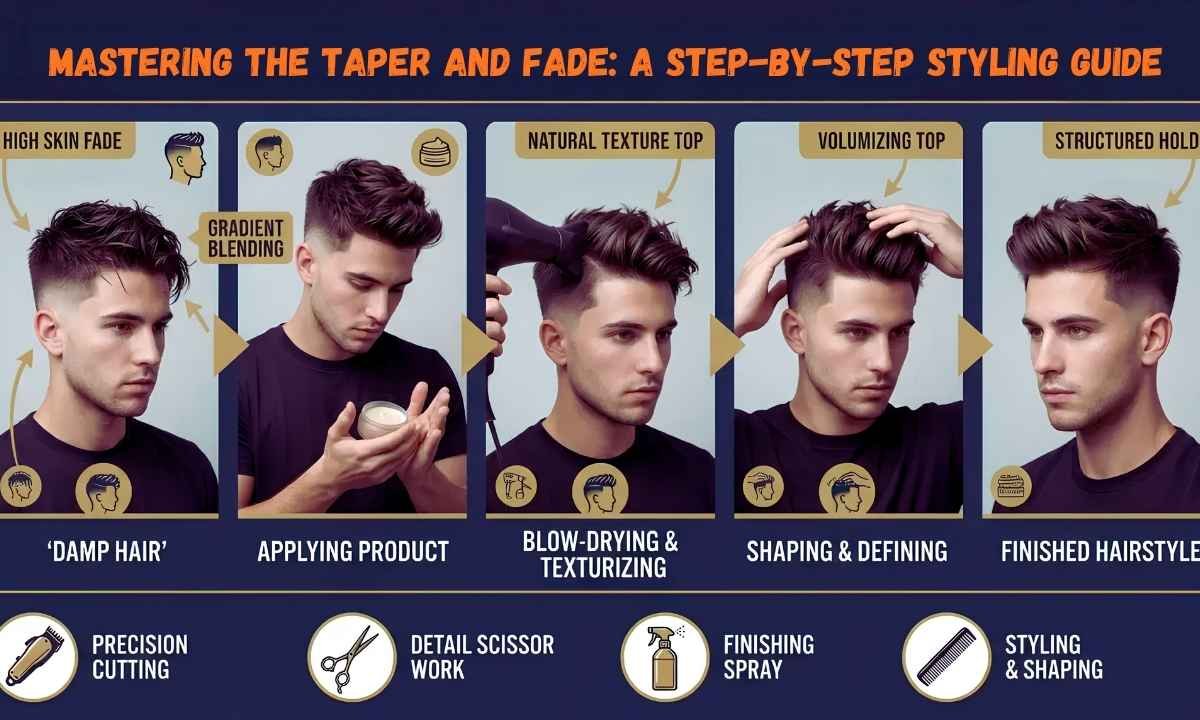
Quick answer: Use the right product for your length. Less is more.
For Short Hair
Use a little matte clay. Rub it between your palms first.
For Medium-Length Hair
Try a light pomade. Comb it through for shine.
For Curly Hair
Use curl cream on damp hair. Scrunch it upward. Don’t brush when dry.
For Thick Hair
Pick a strong wax. It tames bulk and holds all day.
For Fine Hair
Use texturizing powder. It adds lift without weight.
Basic Styling Routine
- Wash with shampoo
- Towel dry gently
- Blow dry the top
- Add your product
- Shape with fingers or a comb
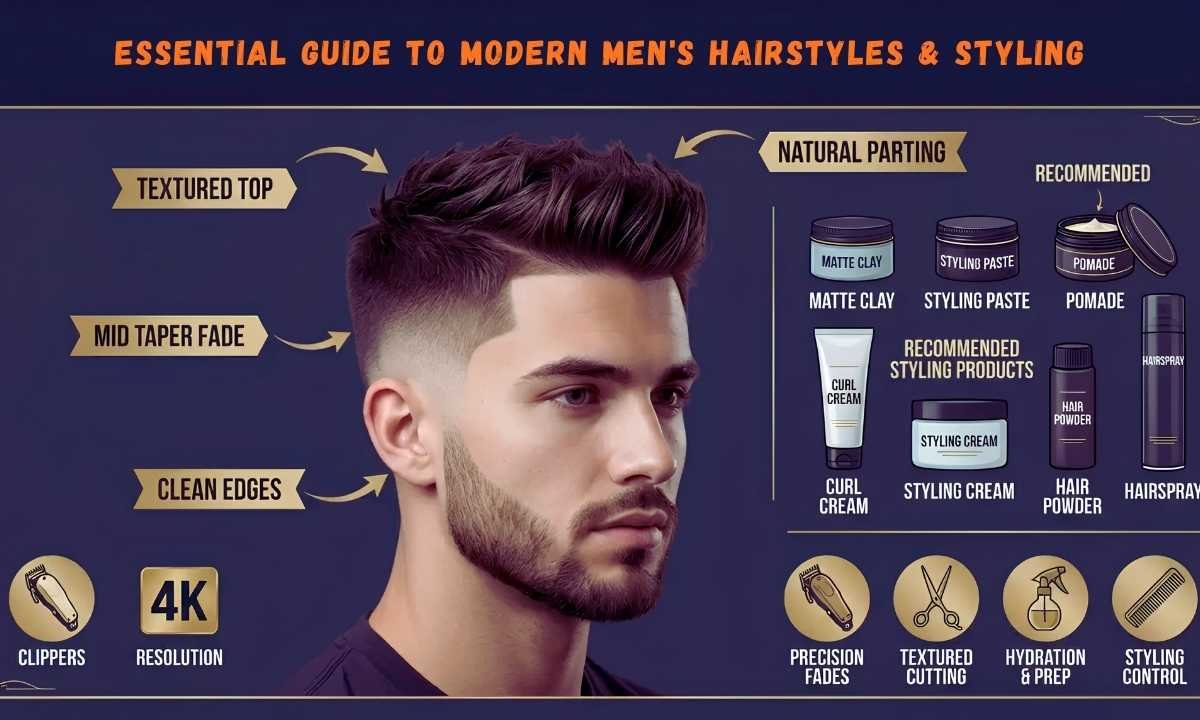
Products That Work With Taper and Fade Haircuts
Quick answer: The best haircut styling products match your hair type and your finish.
| Product | Best For | Finish |
| Matte clay | Short, thick hair | Flat, natural |
| Pomade | Slick back, pompadour | Shiny |
| Sea salt spray | Wavy hair | Textured |
| Curl cream | Curly hair | Soft |
| Texturizing powder | Thin hair | Fuller |
Common Mistakes When Choosing a Taper or Fade
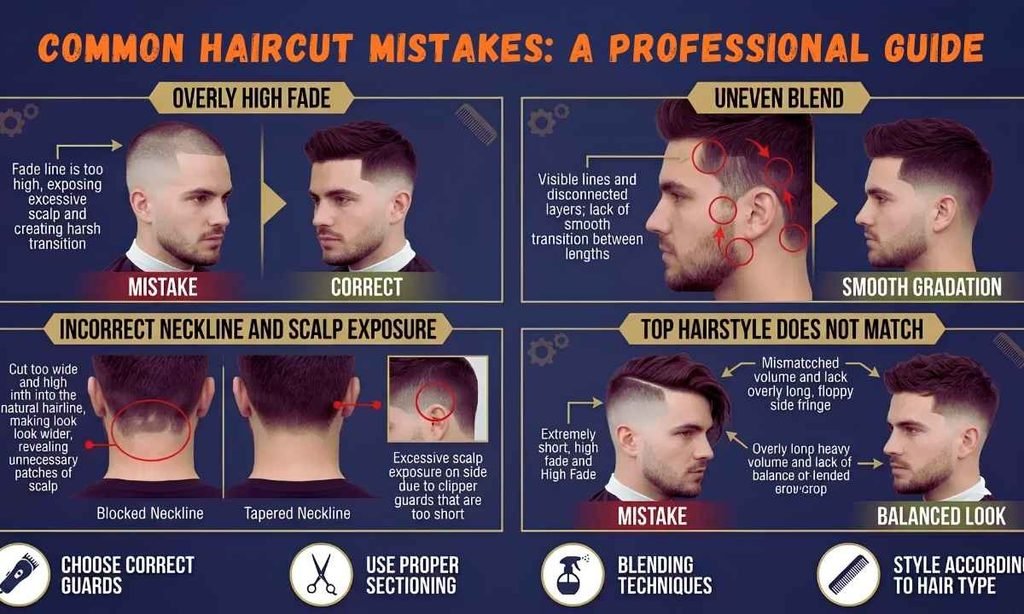
Quick answer: Most bad haircuts come from poor communication. Avoid these seven slips.
Mistake 1: Choosing a Haircut Only by Name
Names mean different things to different barbers. Describe it in detail.
Mistake 2: Not Explaining the Blend Height
Say low, mid, or high. Never leave it open.
Mistake 3: Requesting a Skin Fade Without Considering Regrowth
Skin fades grow out fast. You’ll see stubble in days. Plan ahead.
Mistake 4: Ignoring Hair Density
Thin hair and a high fade don’t mix well. Know your density first.
Mistake 5: Choosing a Style That Conflicts With Your Top Hair
Short top with a bold fade can look odd. Balance both parts.
Mistake 6: Not Showing a Reference Image
You think “medium.” Your barber thinks “short.” A photo ends the guesswork.
Mistake 7: Expecting the Same Result as the Reference
Your hair isn’t the model’s hair. Texture and growth patterns differ. Aim for similar, not identical.
Maintenance Tips for Taper and Fade Haircuts
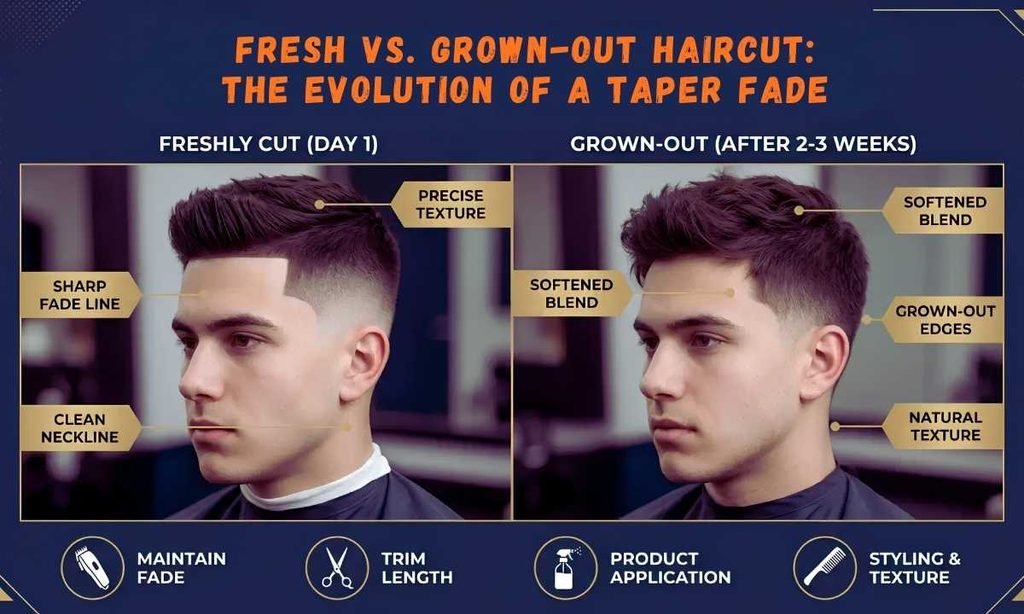
Quick answer: Fades need trims every two to three weeks. Tapers last three to five. Good haircut maintenance saves money.
Taper Maintenance
- Trim every 3 to 5 weeks
- Clean the neckline at home with care
- Use a light product
- Brush daily to keep shape
Fade Maintenance
- Visit the barber every 2 to 3 weeks
- Use a moisturizer on exposed skin
- Wear sunscreen on the sides
- Skip home clipping if you’re new
Smart fade maintenance keeps your lines sharp. Don’t wait for it to fall apart.
General Maintenance Tips
- Wash your hair two or three times weekly
- Use a clean comb
- Book your next visit before you leave
- Protect your neck from razor bumps
Frequently Asked Questions
What is a taper fade
A taper fade blends hair gently like a taper but goes shorter like a fade. It gives a soft look with some contrast.
Is tapered the same as fade
No. A taper stays longer and blends in a small area. A fade goes shorter and covers more. That’s the core taper and fade difference.
Do girls prefer fades or tapers
Opinions vary. Many say a clean, well kept cut matters most. Fit and grooming beat the style name every time.
What lasts longer, a fade or a taper
A taper lasts longer. It grows out gently. A fade loses its shape in about two weeks.
Is a taper a zero fade
No. A zero fade goes down to bare skin. A taper leaves visible hair. They aren’t the same thing.
Conclusion
So, what’s the final word? The taper and fade difference comes down to how short you go and how much skin shows. Taper means soft and neat. Fade means bold and sharp. Both look great when your barber blends well. Pick the one that fits your hair, face, and routine. Then bring a photo to your next visit. Your best cut is one chair away. Go ahead, book it today.
